


BRUSSELS (CN) - In Brussels, everything works - except the government.
Trash is collected and trams run on schedule, yet the European Union's de facto capital has been without a functioning government for over a year, unable to approve budgets amid a mounting financial crisis that threatens essential services, nonprofit workers' jobs and the region's very solvency.
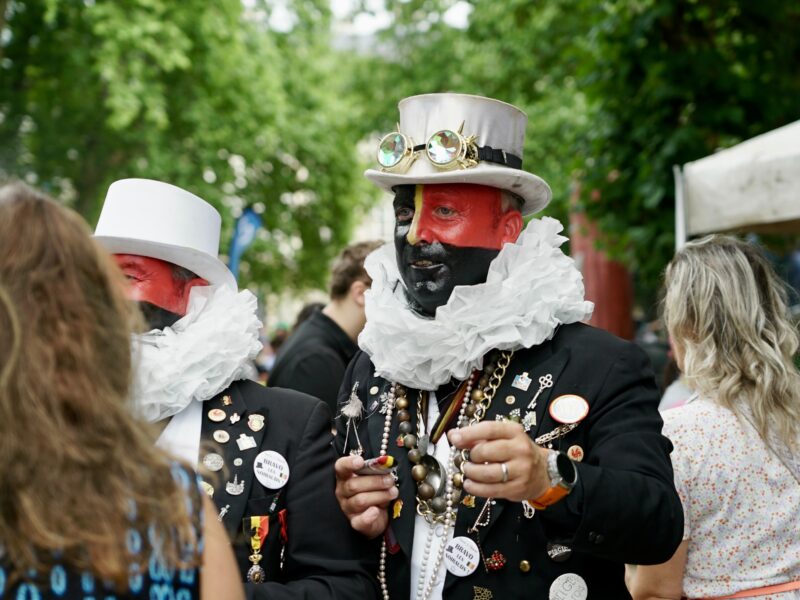
As Belgium celebrates its national holiday on July 21 - commemorating the day in 1831 when Leopold I became the country's first king following a successful revolt against Dutch rule - Brussels remains without the regional government its political leaders promised to deliver by this very deadline. The elections were held over a year ago - on June 9, 2024 - the same day as the 2024 European Parliament and the Belgian federal elections.
"It's like the city is pretending nothing's wrong," says Julie Armand, an architect attending the Belgian National Day festivities in Parc de Bruxelles, the city's central park, with her two sons.
The historical irony runs deep: Nearly two centuries after political division created an independent Belgium with Brussels as its capital, that same spirit of division continues to paralyze the city that led the original rebellion.
Belgium was born from a revolt against Dutch rule in 1830, uniting French-speaking Walloons and Dutch-speaking Flemings - but the old divisions never disappeared. Today, those same language and identity tensions fuel the political gridlock between Wallonia and Flanders.
In the middle sits Brussels, Belgium's third federated region and a multilingual island that became the compromise capital and later the heart of the European Union as the continental crossroads between the United Kingdom, France and Germany.
To add to the complexity of national politics, Belgium operates with multiple overlapping levels of government - federal, regional, linguistic communities and municipal - all exercising jurisdiction in the same territory.
Brussels-Capital Region - officially created in 1989 to balance the country's linguistic and political divisions - has its own government separate from Flanders and Wallonia. The city-region manages its own affairs, like urban planning, transport and economic policy, while also hosting Belgium's federal government, major EU institutions including the European Commission, which functions as the EU's executive branch, and the Council of the European Union, a legislative institution made up from executives of all 27 member states.
In the 2024 Brussels regional elections, the liberal Reformist Movement became the largest party after decades of Socialist dominance - but no clear majority emerged due to fragmentation and linguistic divisions. One year later, coalition talks remain stalled as French- and Dutch-speaking parties struggle to bridge ideological and community-based rifts.
A breakthrough came earlier this month, when Reformist Movement leader Georges-Louis Bouchez made a proposal accepted by Ahmed Laaouej of the Socialist Party - two longtime rivals whose agreement could unlock a grand coalition born of necessity rather than ideology.
But July 21 came and went with no deal in sight.
According to Belgian political observers, the agreement has collapsed entirely due to the Socialists' discontent with the presence of N-VA at the negotiating table - Flanders' main separatist movement and currently Belgium's biggest party. The Socialists refuse to share power with a right-wing party whose leader has called for returning Belgium to the Netherlands, while Flemish nationalists demand influence in a capital they view as financially reckless.
Life without leadership
On a sun-drenched afternoon at Place du Jeu de Balle, coffee shop terraces buzz with multilingual chatter as EU expats discuss lobbying over espresso, pitches from startup founders and local families enjoy leisurely lunches.
A restaurant owner pauses from wiping down outdoor tables after serving moules-frites to a table of suit-clad diners. When asked about the political situation, he shrugs. "It feels like a game to them, you know? Power games instead of actually serving people. That's why I don't pay attention."
Around him, waiters switch effortlessly between French, Dutch and English as conversations drift between policy debates and weekend plans.
This captures the paradox of Brussels' crisis: Most residents don't know it's happening.
"The majority of people from Brussels don't know that we don't have a government," explains Hamza Belakbir, Brussels' regional official for the National Federation of Employees, part of Belgium's biggest trade union with 1.7 million members. "Because the buses, the metro, everything's still working."
But this institutional resilience masks deeper problems. While essential services continue despite bureaucratic inertia, the absence of leadership quietly devastates entire sectors. The region operates under a "twelfths system" - running on one-twelfth of the previous year's monthly budget, with Parliament rubber-stamping the arrangement every three months.
The real victims are thousands of workers in Brussels' sprawling nonprofit sector - a Belgian specialty where government outsources public services to private associations while funding them with public money. Social economy employed 393,000 full-time equivalents in 2017 - accounting for 12% of employment in Belgium - according to the latest data, from 2017.
The human cost is stark. According to an internal report of struggling organizations obtained by Courthouse News, these groups range from drug harm reduction services unable to procure sterile syringes for HIV prevention to homeless outreach programs forced to reduce street services for 150 people daily - all because their "discretionary" subsidies remain frozen without an approved budget.
"Some of them are just not sure about their income," Belakbir notes. "If you're not sure about how much money you're gonna get in your budget, you can't keep the contracts of people that you hired in the last five years."
For those who understand the crisis, it breeds contempt for the entire political system.
"It actually creates an anti-politics feeling in the whole population," Belakbir observes. "The politicians, they have one job - to get along and find a project that is the average between all their ideologies, and they're not able to do that. And it's been one year."
A financial house of cards
Behind the human impact lies a financial emergency: Brussels' regional debt has ballooned to 15 billion euros (roughly $16.3 billion) and is projected to reach 16 billion euros by year's end - equivalent to the entire annual budget of a major U.S. city. The deficit is nearly 20% of annual spending, pushing the debt-to-revenue ratio above 250%.
A recent local media investigation claimed that regional authorities diverted up to 250 million euros in EU loans - money specifically earmarked for transportation infrastructure - to plug budget holes: paying daily expenses, rolling over old debt and servicing existing loans.
As one former Brussels finance minister put it, this was "sjoemel" - Brussels dialect for tampering or fiddling. The European Investment Bank firmly rejected Brussels' interpretation, stating the loans "cannot, under any circumstances, be diverted and used for other purposes."
The rot runs deeper. Brussels is a tangle of 22 semi-autonomous agencies, each with independent budgets and debts. The city's water utility, Vivaqua, carries over 1.2 billion euros in bank debt; fire services and street cleaners have a 1-billion-euro pension shortfall; public hospitals owe 500 million euros.
Most damning: Brussels' auditors have been unable to certify annual accounts since 2017, with the federal Court of Auditors in recent years going from "refusing to certify" to outright "abstaining." It's a sign the data is no longer reliable enough to evaluate.
The crisis turned public in Schuman Square, at the geographic heart of EU power flanked by the EU Council and the European Commission headquarters. Unable to cover a 12-million-euro cost overrun on renovations, the Mobility Minister wrote to five European institutions begging for financial help - and was publicly rebuked by Prime Minister Bart De Wever.
"It is truly a disgrace, a total humiliation, the Brussels Region begging for money to build a square," the N-VA leader said. De Wever, the first Flemish nationalist politician to hold the office of prime minister of Belgium, has escalated pressure with unprecedented threats.
In May, he declared bluntly: "If Brussels comes asking the federal government for money, I will put it under guardianship." He promised to "impose strict austerity conditions to put a stop to the 'malgoverno' in Brussels."
The threat carries constitutional weight despite practical impossibilities, revealing the paradoxical nature of modern Belgium - a separatist head of government who wants to end the country now threatening to take control of its capital.
Adding to the surreal nature, King Philippe used his National Day address Sunday to publicly scold Brussels politicians: "In Brussels in particular, it's urgent that a new government starts its work."

The waiting game
Party leaders are not expected to resume talks until after summer vacation, ensuring Brussels will remain without government for weeks if not months longer.
The standoff reveals a perverse incentive structure: Whoever forms a government inherits a financial crisis that could destroy their political careers. With 16 billion euros in debt, frozen EU loans under investigation and credit agencies threatening further downgrades, taking power means taking responsibility for problems that may be unsolvable.
For now, Brussels continues its surreal existence as a capital without leadership, where EU headquarters operate smoothly while the city around it quietly crumbles - a fitting metaphor for the institutional contradictions that have come to define modern Belgium.
Source: Courthouse News Service