

COPENHAGEN, Denmark (CN) - When 100,000 Danes take an after-hours peek at more than 200 of Copenhagen's public and private institutions Friday as part of the annual Culture Night, the doors to the Ministry of Defense will remain firmly shut.
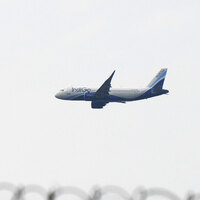
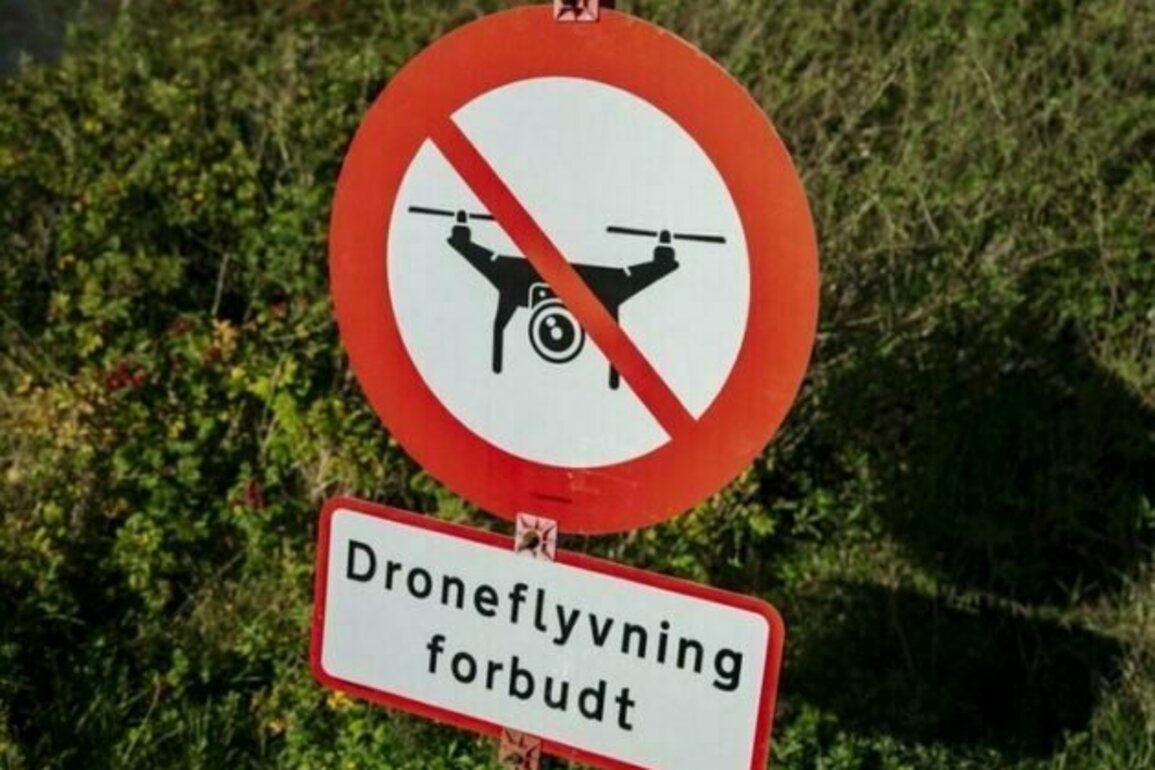
Recent incidents where unidentified drones entered Danish airspace - while authorities simply watched, saying shooting them down risked damage to buildings and infrastructure - are having psychological as well as practical effects on this Scandinavian country.
That includes the ministry's decision not to open for the cultural event, pushed by the Danish Defense Intelligence Service's recent raising of some threat levels against the nation's armed forces.
In early October, the DDIS categorized the possibility of sabotage against its armed forces as "high," the second-highest level, along with the threat of military provocations against NATO states, linking Russia to its conclusions. In a sign of changing patterns of "warfare," the agency found the threat of conventional military attacks against Denmark was "none."
"The DDIS assesses that Russia is currently waging a hybrid war against NATO and the West," it said in a statement. "It is very likely that the hybrid threat from Russia to NATO will increase in the coming years."
The nation's airline industry partially shut down for hours in September, while Danish airspace was closed to civil drone flying for a week.
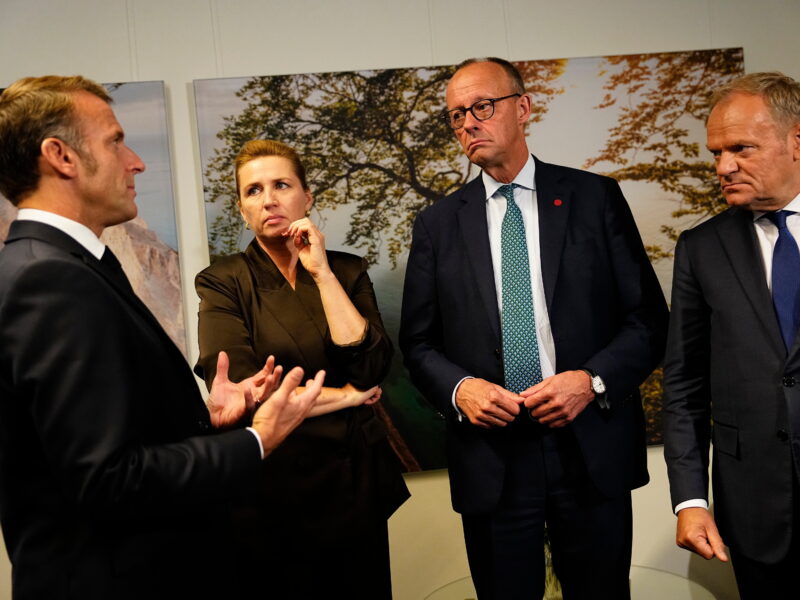
Danish Prime Minister Mette Frederiksen told reporters at a European Summit in Copenhagen on Oct. 1, "I hope that everybody recognizes now that there is a hybrid war and one day it's Poland, the other day it's Denmark, and next week it will probably be somewhere else that we see sabotage or we see drones flying."
Drone sightings have been reported across the EU, including in Poland, Germany, Belgium and Norway.
"When I first read about the drones roaming in Denmark, I got worried," said Kan Ramussen, a Danish father of two living in Greve, in the greater Copenhagen area.
Echoing many other Danes, he said he is puzzled why the authorities are taking so long to find where the drones came from.
"I'm surprised that we are not better prepared when foreign objects can roam our territory without any consequences. As a minimum, I would expect authorities to have found out who was behind this. Of course, I am not an expert, but it's apparently very difficult to find the culprit," Rasmussen said.
As Danes questioned how their country would fare in case of an invasion, politicians sharpened their rhetoric to counter the immediate drone threat. They prioritized higher security investments and collaborations with the EU to establish a common drone wall. However, authorities seemingly have no concrete idea who was responsible for the unmanned aircraft.
Kevin Hjgaard-Christiansen, director and owner of KP-lamp, a local lamp manufacturer, agreed the incidents were disturbing.
"It's surprising how unprepared Denmark is - also when it comes to the entirety of NATO. In reality, if Denmark is not yet prepared to defend itself in such a situation, our allies should stand ready to compensate for our own lack of responsibility," he said to Courthouse News.
Neighboring countries and the U.S. assisted Danish security for the two Copenhagen-hosted informal leaders' meetings last week, where top EU figures and invited allies discussed security matters. Drones made up a big chunk of the agenda.
"I don't feel unsafe, but I have a feeling of disappointment due to our lack of preparation. The world situation is uncertain, and that means we must prepare for this reality. What if the drones carry bombs or something else in the future?" Hjgaard-Christiansen said.
A Tuesday opinion poll by Danish broadcaster DR shows 52% of 1,024 respondents from Sept. 26 to Oct. 3 have little to no faith in the Danish authorities when it comes to tackling airborne threats.
"The Danes have just seen that there are drones that have flown over Denmark that were not shot down. If that is what it is an expression of, then I can live with the numbers," Prime Minister Mette Frederiksen said live on DR, Tuesday night.
Recently, Frederiksen and her government have toned down their rhetoric, from initially calling the drone interference an active "hybrid attack" by a foreign actor, to now dodging questions on whether there was concrete evidence of that.
"Recent events in Denmark and across other European countries show how difficult it is to handle hybrid threats, both for defense forces and for the authorities more broadly," wrote Niels Byrjalsen, a postdoctoral researcher at the Center for Military Studies at the University of Copenhagen, in an email to Courthouse News.
"The public and the media often expect clear, fast, and simple answers, but the fact of the matter is that these subversive activities in the gray zone between warfare and 'normal' peacetime interactions are highly challenging to avoid entirely, if you do not want to fundamentally change the way open societies function," he wrote.
Byrjalsen said that especially for liberal democracies like Denmark, it is difficult to completely defend against hybrid threats. With the current trajectory of world politics, people might have to get used to a permanent state of the possibility of conflict.
"The key is to keep finding relevant countermeasures for the hybrid stuff while building up the deterrence and defense posture that is necessary to avoid escalation and actual war," Byrjalsen wrote.
As Denmark discusses how far it is from being fully capable to defend against a potential invasion, people should expect to hybrid attacks to continue, Frederiksen said in a speech in September.
"The drone activities in Denmark underlined the hybrid challenges facing European countries and gained extra attention due to the subsequent EU summit in Copenhagen. Yet, it also underscored that European nations stand together in facing these challenges, by helping each other out with personnel and technologies, and by leaders showing a united front," Byrjalsen wrote.
"For Danish decisionmakers and the Danish public, it was an important reminder to not forget the hybrid threats and investments in countermeasures and preparedness in a period where much of the main attention is on investments in conventional military capabilities and support for Ukraine," he said.
Courthouse News correspondent Lasse Srensen is based in Copenhagen, Denmark.
Source: Courthouse News Service