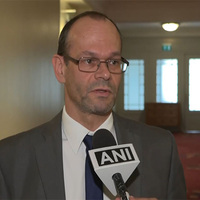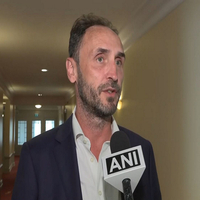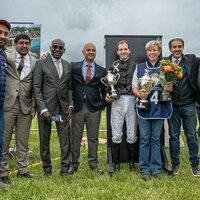


Proud winners of this year's Goldman Environmental Prize for their successful campaign to protect one of Europe's last remaining wild rivers from hydropower development, Albanian activists Olsi Nika and Besjana Guri remain committed to protecting their country's waterways from other looming threats.
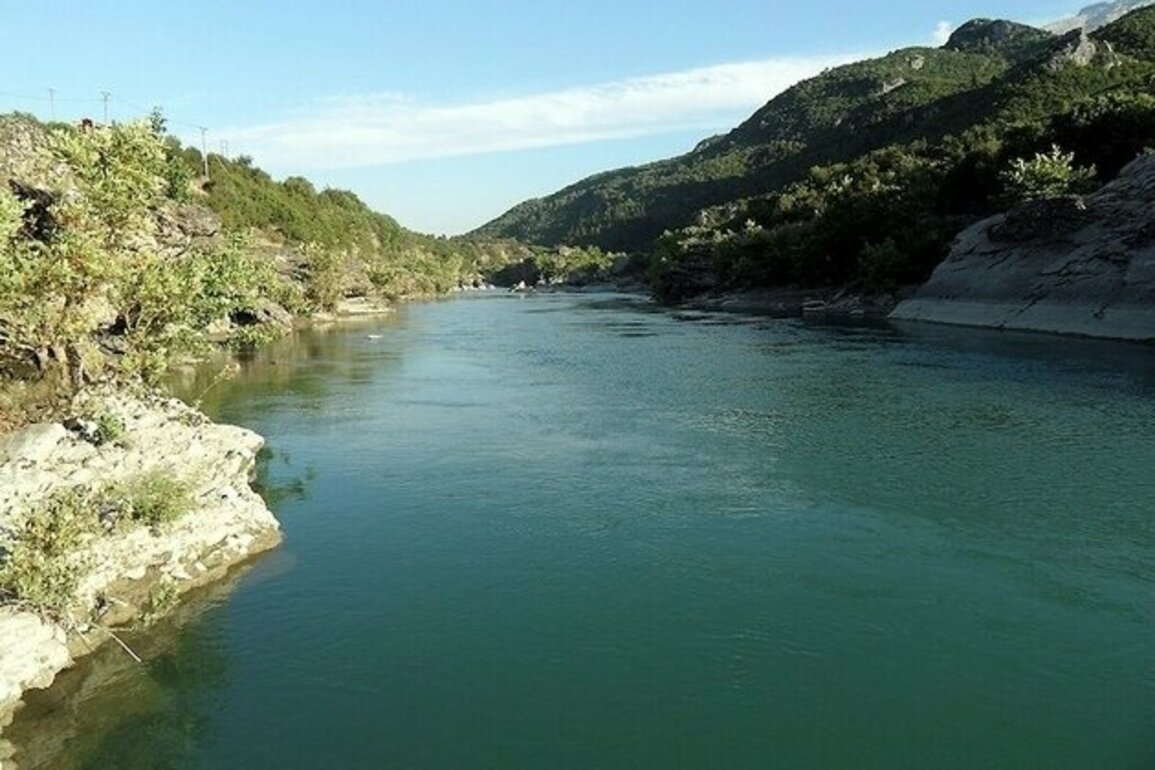
The Vjosa River, running northwest 269 kilometres (167 miles) from its headwaters in the Pindus Mountains in Greece to the Adriatic Sea on Albania's coast, is one of Europe's last wild rivers, running undammed and free-flowing, rising and ebbing with the seasons within Albania. (There is a large dam on the Vjosa at its headwaters in Greece.)
Thanks in significant part to a 10-year effort by Nika and Guri, the Vjosa and three of its tributaries are now protected within the Vjosa Wild River National Park, a European first, encompassing some 400 kilometres of free-running water..
The Goldman Prize, awarded annually by the Goldman Environmental Foundation in conjunction with Earth Day, showcases the work of grassroots environmental activists.
That the Vjosa was still a wild river back in 2014 was something of a miracle, Nika, an aquatic ecologist, told The Energy Mix in a recent interview. It escaped the "tsunami" of hydro development that engulfed Albania in the late '90s.
Breaking out of its isolation at that time, after decades of impoverishing rule by an insular Stalinist regime, Albania set out on a breakneck path to modernization and urbanization, hungry for energy.
Blessed with abundant water resources, the country seized on hydro and built it rapidly, with little regard for infrastructure quality or the health of its watersheds. Nika noted that grid infrastructure losses in the early 2000s averaged 40%.
This gold rush moment for hydropower grew even more intense after the energy crash of 2000, which saw panicked officials making energy decisions "that were not visionary enough to foresee what would happen next," Nika said. "Albania's rich water resources meant no one ever sat down and asked 'How much energy do we need now, or in 2030?' and 'Are there alternatives?'"
With loans pouring in from the World Bank and the European Bank for Reconstruction and Development, and a flood of concessions for the taking, hydropower investment went from being "very popular, very sexy" to "totally out of control" by 2013, the year Nika and Guri founded their NGO, EcoAlbania. Their primary objective was to save the Vjosa from the fate of Albania's other rivers.
As the two activists began their fight to protect the Vjosa, plans were in the works to build eight large dams along its 270-kilometre course. (For comparison, the 2,000-kilometre Columbia River in British Columbia, nearly 10 times its length, has 14 main stem dams.)
Protecting the Vjosa in perpetuity from hydropower development and other threats means the campaigners are one huge step closer to safeguarding precious freshwater biodiversity in a continent where it has been profoundly degraded by urbanization, pollution, and over one million human-made barriers like dams and dikes.
Those barriers have erased much riverine life, with freshwater migratory fish (like sea trout) populations declining by 94% across Europe since the 1970s, notes the Goldman Environmental Foundation.
The Vjosa alone hosts nearly 1,200 plant and animal species, including the critically endangered European eel (which is migratory) and the endangered Egyptian vulture.
"Every time I go to the river, I feel like I am seeing something for the first time. Something is always different, whether it is the size or shape of a sandbar, or the colour of the water. In some places, the water is so clear you can see the fish," Guri, EcoAlbania's communications lead, told The Mix.
The Vjosa is "both majestic and mystical, running where and when it wants to go."
Along with much of the rest of the Balkans, Albania suffered record heat last summer, compounded by months of drought. Such parched conditions are part of a larger trajectory for the country. They first became a matter of public concern during a 2017 drought that forced Albania to import power when its hydro reserves dropped too low.
Projecting the volume of its main rivers (the Drin and the Mat, alongside the Vjosa) back in 2019, the government said water levels would be up to 20% lower within the decade.
Damming the Vjosa to extract more hydropower should be a non-starter in a warming world, EcoAlbania stressed, in a campaign to raise public awareness of the need to protect the river. Guri said that messaging had to cut through well-financed and ongoing "propaganda" about Albania's destiny as a hydro energy "superpower."
While climate change remains a persistent and growing threat to the health of the Vjosa and Albania's other rivers, the odds of death-by-hydro seem to be receding as the sunniest nation in Europe pivots to solar.
In latest news, Tiran (the capital) has greenlit two new solar power projects totaling 54 MW, adding to hundreds of megawatts of solar already installed. Another round of solar projects totalling 148.5 MW are expected to be approved soon. Albania is also aggressively pursuing rooftop solar, Nika noted.
But Nika nor Guri say the Vjosa is still at risk of being significantly drained by massive luxury developments on the Adriatic coast.
While the government is anxious to frame these developments as tourism-related, Nika disagrees.
"It's just the government offering public land for free to investors who will come and build massive villas that will be owned by politicians and VIPs, contributing nothing to the local economy," he told The Mix.
The resource demands of these villas-from the wetlands they will displace to the gravel used to build them to the water to sustain them-will mean "ecological disintegration," both on the coast and upstream, he said.
The two activists are now in an ongoing court battle to prevent the builders of these coastal villas from diverting water from the Shushica River, a critical tributary of the Vjosa, for their private use.
They are also fighting alongside other activists to protect the Vjosa delta from development. While the delta is officially in the Vjosa Wild River National Park, the Albanian government's move last year to signal its willingness to allow tourist development within the ecologically rich and fragile estuary means it is now in the crosshairs of real estate moguls.
Source: The Energy Mix