

Curtis Large
Download PDF
Sep 2 2025
1
viewsalexeynovikov/DepositphotosIn the summer of 1997, Russian Prime Minister Viktor Chernomyrdin startled a press conference after meeting with European Commission President Jacques Santer. Were doing everything for Russia to become a member of the EU, he told his audience. For us its important. And Russia will be a member of the EU. This was no slip of the tongue. With the Cold War well and truly thawed, Boris Yeltsin, the Federations President, had repeatedly floated the idea of accession to the Unions leaders since at least June 1994. But they were not receptive to Yeltsin, despite Brussels agreeing a fresh Partnership and Cooperation Agreement with Moscow. French President Franois Mitterrand explained that the EU was a long way from even considering such a move, having barely begun to come to terms with the implications of embracing East European states. Still, Commission officials stated that no EU leader [had] categorically ruled [it] out (White & Feklyunina 2014, 7071).
A Fractured Vision: Russia as Europe?
Amid the ongoing Russian invasion of Ukraine, the dream of Chernomyrdin and Yeltsin appears dead forever. In October 2023, German Foreign Minister Annalena Baerbocktold EU counterpartsin Kyiv that she envisaged a Union that will soon stretch from Lisbon to Luhansk. The Kremlins Foreign Ministry spokeswoman Maria Zakharovaresponded facetiously: Its either [Russia] joining the EU or she forgot about the requirement to turn by 360 degrees, referring to a past mishap Baerbock made when she urged President Vladimir Putin to change his course [on Ukraine] by 360 degrees.
This is not to suggest that Russian accession (or that of Russian-claimed territories) to the EU was ever a likelihood. Confirming Brussels initial coolness, the European Councils Common Strategy of the European Union on Russia(1999) clarified that the Federation, as a resurgent power unto itself, would not pursue EU membership under any circumstances. Although Putin reaffirmed this stance in January 2001, seven months later he called for a radical improvement in Moscows relations with Brussels during a speech to the German Bundestag. In it, Putin argued for a European integration that would increasingly combine its potential with that of a fully sovereign Russia (White & Feklyunina 2014, 129).
Throughout the 2000s, it became clear that Russian leaders dismissed the normative supremacy of the EU and thus continued to snub the notion of joining it. Their rhetoric was broadly pro-European, but stressed economic over political cooperation. Accordingly, Putin emphasised that Russia would only ever accept bilateral equality with the bloc. As he queried in relation to the EUs Energy Charter in 2006: if they want us to give them access to the very heart of our economy what will we get in return? (White & Feklyunina 2014, 130). Conversely, the EU concentrated increasingly on the contentious politics shaping the relationship, often criticising Russias domestic decisions, and especially its wars in Chechnya (19992009) and Georgia (2008). These criticisms were perceived by Moscow as a rejection of its calls for level diplomacy (White & Feklyunina 2014, 13132, 266).
As the Kremlin struggled for what it saw as an equal partnership with Brussels, its friendly overtures nonetheless encouraged Western observers to carry on contemplating full EU membership for Russia. US PresidentBill Clinton, former German ChancellorGerhard Schrderand Italian Prime MinisterSilvio Berlusconiwere all among the prominent figures who expressed their hopes that the Federation might join. Other commentators deliberated whether Russia would, could or want to meet Brussels accession criteria (e.g. Protsyk 2003; Kux 2005; Lynch 2005). The Russian people, for their part, were less enthusiastic. In one survey conducted between 2000 and 2014, support for EU membership peaked at 55% in 2005. However, perceptions that Russias culture, politics and economy were incompatible with the Union remained widespread, and those in favour consistently dipped to just 19% in under a decade (White & Feklyunina 2014, 19899, 207).
While the prospect of EU accession is probablyeven more unpopularin Russia today, it can still be interpreted as the endpoint of a more conventional liberal discourse in the country that sees Russia as Europe. Implied here are narratives that frame the Federation as part of European civilisation, viewing its historical traits as complementary rather than divergent. Proponents argue that this harmony was particularly evident when the Soviet Union reconciled with the West to end the Cold War. Furthermore, while recognising Russias uniqueness, the Russia as Europe position asserts that states can possess distinct identities without needing to follow separate developmental paths (White & Feklyunina 2014, 101103).
The proposed shape of fuller integration under this concept has never been universally accepted. The socially liberal Yabloko partys 1998 manifesto opined that Russia would never join the EU, but by 2003 it favoured complete membership. In its manifesto for the 2007 State Duma elections, Yabloko less committedly stood for broad consolidation with Brussels while accepting that the nature of this process would organically evolve over time (White & Feklyunina 2014, 121). Despite such general uncertainty, by the mid-2000s Russias progressive opposition largely agreed that national prosperity hinged on Europe.
This premise was increasingly at odds with the view of the Kremlin, which accepted Russia as a European country, but in 2006 also embraced the nationalist idea of sovereign democracy as a doctrine of its ruling United Russia (UR) party. As aforementioned, the EU remained wary of Russia despite its engagement with the bloc, and so Moscow thought little of responding with a declaration that the 2008 financial crisis had weakened Brussels global standing (White & Feklyunina 2014, 107, 117). As the administration criticised the EU in public, it also took clandestine measures to neutralise the liberal actors in Russia that supported it. Here, as was often the case, it deployed a sham virtual opposition to perform this task on its behalf (Petrov, Lipman & Hale 2010, 10).
A Hollow Movement: The Democratic Party of Russia and the 200708 elections
In December 2005, the Democratic Party of Russia (DPR), a minor relic of the perestroika era, held a congress to elect its next leader. Mikhail Kasyanov, a prominent figure often compared at the time to pro-Western Ukrainian President Viktor Yushchenko, was widely expected to take charge. However, his supporters were suddenly barred from the premises while Kremlin-backed delegates elected Andrei Bogdanov, an obscure and eccentric figure who had been a member of UR as recently as 2003 (Horvath 2011, 1920).
In his first year of leadership, Bogdanovs DPR largely toed the Kremlin line. The party publicised that the Western model of developmentwas failingand that the Federation wouldnever join the EU. Paradoxically, the DPR simultaneously began to publicly experiment with hollow endorsements of liberal internationalism. It called forRussias participationin various European democratic forums, and, in November 2006, a DPRdelegation metwith a regional branch of French President Nicolas Sarkozys Union for a Popular Movement.
While presenting itself as independent, the party essentially remained loyal to Moscow. The Kremlins goal was to destabilise its electoral opposition ahead of the 200708 election cycle for the State Duma and presidency, with the intention of splitting the pro-Western vote by encouraging people to support the DPR (Horvath 2011, 20; White & Feklyunina 2014, 12122). By the spring of 2007, the DPR appeared to have undergone a dramatic transformation, reinventing itself as the sole political force championing the revolutionary step of Russias full accession to the EU. Bogdanovs speeches, the partys messaging and its public actions all centred on the thesis that Russia is European and that its future lies with Brussels.
This missionwas presentedas a historical correction. Russia has been a European country for centuries, Bogdanov declared repeatedly, and has had key positions in ensuring European security. The DPRs communications emphasised cultural compatibility and the promise of economic modernisation. Framed in civilisational terms, the partys vision portrayed Russian isolationism as a tragic detour from Europe, and its own platform as a means of restoring that unity against the supposed threat of a new Asian barbarism.
The partys reorientationwas codifiedin its new political programme, announced in March and entitled Russias Course Towards Joining the European Union.Bogdanov saidthat the DPR would contest the December State Duma elections with EU accession as its central plank, and that the party aimed to initiate a nationwide referendum on the issue in 2009. A draft bill, On the Initiative for the Russian Federation to Join the European Union, wasinternally proposedin August to formalise this goal. The bill also promised a mechanism for assessing Russian legislation against the EUs, along with a government body to ensure their eventual alignment.
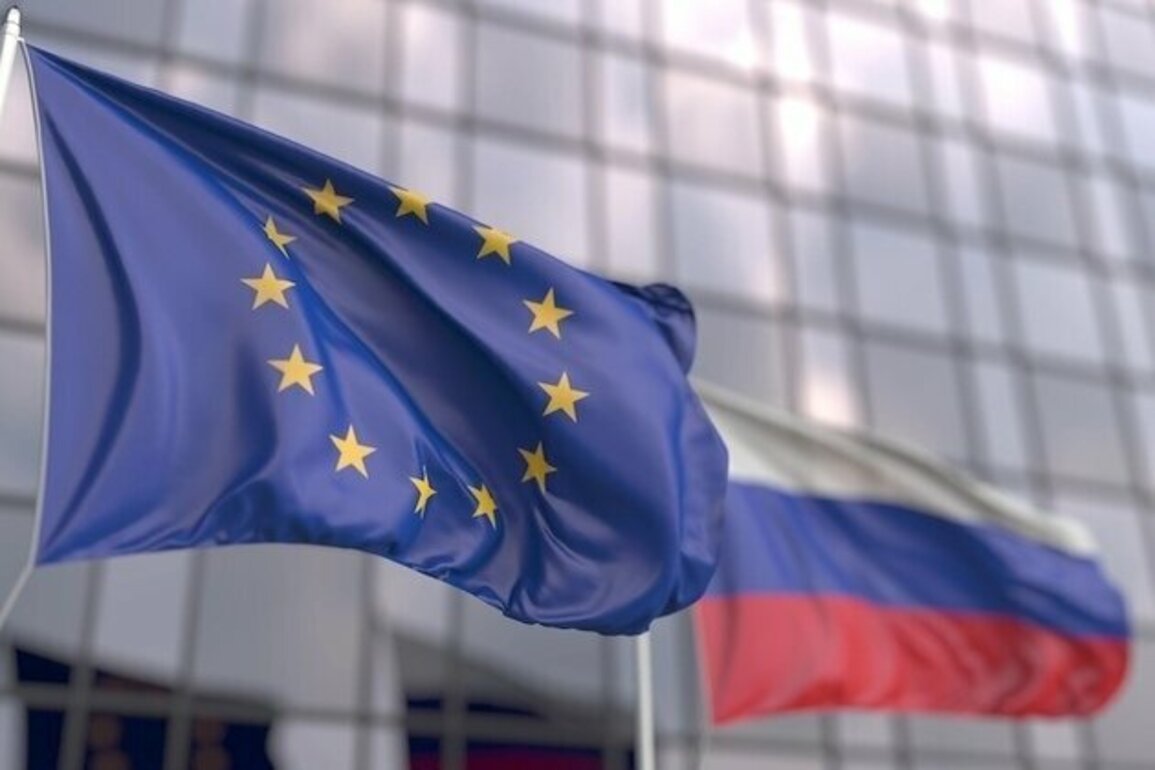
Beyond policy proposals, the DPRs campaign was also enacted through a series of spectacles designed to dramatise Russias European credentials. In May, the party staged a rally on Moscows Triumfalnaya Square to mark its seventeenth anniversary. The event was choreographed as a celebration of European values, complete withEU flags, speeches invoking pan-European solidarity andslogans such asFor a Strong Russia In a United Europe!. Bogdanovaddressed the crowdin the spirit of reconciliation: Russia is part of European civilisation one of its most important components. There is no doubt that Russia must take its rightful place in the European family.
The rally was followed by a series of regional demonstrations across the country. In Vladivostok, DPRactivists installeda mock border post of the European Union, declaring that Russias eastern frontier should one day also mark a frontier of the EU. This installation coincided with the launch of a motor convoy from Vladivostok to Brussels, which was intended to carry the partys message across the Federation and into the heart of Europe. The journey was led by former party leader Vyacheslav Zhidilyaev, who drove through more than thirty Russian regions and several EU countries, greeting the DPRs local branches along the way.
The culmination of this stunt was the partys congress in Brussels, held in September. The choice of venue was framed as deliberate and symbolic.Bogdanov explainedthat the DPR intended to close the circle of disasters and ordeals that Russia had experienced since the October Revolution in 1917, which he described as a rupture from Europe. The congress was staged as a gesture of return to the continent, echoing the Second Congress of the Russian Social Democratic Labour Party, held in Brussels in 1903, which had led to the formation of the Bolshevik Party. Now, a century later, the DPR purportedly sought to reverse that trajectory and re-anchor Russia in the European fold.
At the congress, the DPRadopted a new programme, 12 Steps to Europe: Guidelines for the Decade. This document outlined a far-reaching plan for Russias transformation in line with EU standards. It called for political and economic harmonisation, entry into the Schengen Area, reforms to conscription and stricter environmental regulations. The programme also highlighted the importance of human rights, a robust civil society and anti-corruption measures. These proposals were presented as prerequisites for EU membership and as necessary reforms for Russias domestic renewal.
Bogdanovconsistently positionedthe DPR as the authentic voice of Russias middle class. He described this demographic as comprising individuals who value employment, their family, their home and their car, priorities which he equated with Europeanism. Bogdanovfrequently referredto the middle class as independent people, a term he used interchangeably with Europeans. This framing allowed the DPR to present its campaign as both a national project and a personal one an appeal to voters desire for opportunity and modernity. Throughout the summer and autumn, the DPR continued to stage public events designed to reinforce its message. In Moscow, activistslaid a commemorative stoneon the Arbat to mark the beginning of Russias Path to Europe. Likewise, in St Petersburg, the party held atheatrical eventcalled Open the Gates to Europe!, where symbolic gates were installed and ceremonially parted. The DPR also celebrated European holidays such as FrancesBastille DayandGerman Unity Dayoutside their respective embassies, and organisedmodest ralliesin support of visa liberalisation.
Following itslast-place finishin the State Duma elections on 2 December 2007, having received 89,780 votes (0.1%) and won no seats, the party promptly shifted its focus to the 2008 presidential campaign. The nomination of Bogdanov one week later signalled a continuation of the DPRs pro-Europeanism. The party naturallymaintained its motto: DPR is your European choice. Despite the DPR lacking parliamentary representation, Bogdanov succeeded in gaining access to the ballot by securing the requisite two million public signatures. This unlikely procedural success, combined with his previous association with UR, fuelled furthermedia speculationabout the partys role as controlled opposition. This time its campaign was modest. Financial disclosuresrevealed a budgetof less than five million roubles, only a fraction of the spending available to the other contenders. The election results from 2 March 2008 confirmed the partys limited influence. Bogdanov camefourth of four, receiving 968,344 votes (1.3%). The DPR remained politically insignificant.
The Mask Slips: Right Cause and the 201112 elections
After the presidential election, Bogdanovs outfit gradually faded from view. In November 2008, three minor liberal factions, including the DPR, merged to form a new party Right Cause (White & Feklyunina 2014, 122). Generally speaking, Right Cause inherited the DPRs pro-European rhetoric. In itsearly programme, the party echoed familiar themes: Russia as part of European civilisation, maximum harmonisation with the EU and the need for visa rules to be relaxed. From March 2009, Right Cause also cultivated ties with European actors. Co-ChairmanLeonid Gozman metNorwegian and Swedish parliamentarians, as well as Swedens Foreign Minister, Carl Bildt. These engagements were presented as pragmatic steps towards cooperation with Europe, but the partys tone grew increasingly cautious.
While such meetings were framed as efforts to foster mutual understanding and dismantle foreign prejudices, the partys own programme qualified any enthusiasm.It stressedthat rapprochement with the continent must be pursued without compromising Russias sovereignty or economic resilience. The interests of our country may objectively contradict the interests of other states, including Western ones, the programme warned, while still calling for peaceful diplomacy over sharp, unpredictable unilateral actions. European integration was no longer portrayed as a civilisational imperative but rather as a conditional process, contingent on Russias strategic priorities. The language of Europe remained, but it was subtly recoded and no longer placed centre stage.
In June 2011, oligarch Mikhail Prokhorov was appointed party leader, reviving Right Causes European messaging with renewed energy. Though widely seen as a Kremlin-sanctioned figure,Prokhorov declaredthat Russia had a unique chance to join the leading countries on the side of Europe. The partysupdated programmenow proposed full EU membership between 2030 and 2040, beginning with the creation of a shared educational and cultural space, visa-free movement and exchanges of students and professionals. This marked the final instance in which EU membership was proposed explicitly by Right Cause, with a defined timeline and phased steps towards accession. Even then, this suggestion was qualified by appeals to national interest and economic caution, emphasising that integration must not place an undue burden on Russias internal development.
Prokhorov was ousted in September, an outcome he attributed to Kremlin interference (Ledeneva 2012, 25). Yet the partys new leader, Andrey Dunaev, continued to emphasise the importance of closer relations with the EU. In November,he advocatedfor associative membership as a first step, with the long-term aim of full integration, arguing that the EUs social and economic model offered significant advantages over alternatives such as the nascent Eurasian Economic Union.
In the State Duma elections held on 4 December 2011, Right Causefinished last, securing 392,806 votes (0.6%), and won no seats. For the presidential election on 4 March 2012,the party endorsedVladimir Putins candidacy, a gesture that appeared to finally discredit its supposed pro-Europeanism. Within weeks, Right Cause pivoted even further from EU alignment by announcing a fullideological review. The word liberal was specifically removed from its programme, and any mention of European integration was now conspicuously absent. Right CausesWorldview Platform, unveiled that December, finalised this transformation. It declared that Russia must rely solely on itself and described the West as spiritually exhausted and morally adrift. The EU accession narrative, once central to the partys platform and to the DPRs before it, was indirectly but emphatically abandoned.
Conclusion
The concept of Russia joining the EU, while always unlikely, was not always unthinkable. In January 1992, UK Prime Minister John Majorpublicly urgedthe European Communities to widen its imagination and consider membership for Russia, arguing it would banish utterly the threat of nuclear war. But internal memos revealed deep unease. British officials warned that Russias nuclear status might allow it to dominate the bloc, while its economic fragility could destabilise it. Stephen Wall, a senior adviser, annotated one memo with a blunt caution: Prime minister, this is a polite way of saying: please dont talk about Russian membership of the EC. These concerns were later echoed in the European Councils 1999 Common Strategy, which characterised Russia as a distinct geopolitical pole and thus ruled out its accession altogether.
This wariness can be interpreted both as prudent realism and as a missed opportunity. In a September 2024 interview, Russian Security Council Secretary Sergei Shoigu offered asardonic reflection: Theyve made a mistake. They should have gotten us into the EU as soon as possible. And we would be like the EU members: just a command from across the ocean, we would be folding our paws and getting ready to jump through a hoop. Shoigus remark, although obviously tongue-in-cheek, underscores the irony that ran through the baseless campaigns of the DPR and Right Cause.
What began during the 200708 election cycle was never a serious bid for European integration, but a carefully staged performance by the Kremlin intended to suppress genuine political opposition. The DPRs campaign, with its symbolic rallies, legislative proposals and congress in Brussels, was presented as an attempt to redirect Russias trajectory towards European civilisation, including in opposition to the perceived rise of an unscrupulous East. Its successor, Right Cause, briefly revived talk of EU membership under Mikhail Prokhorov, proposing entry by 2040. But even this vision, by no means the centrepiece of the partys political programme, was tempered by appeals to pragmatism and economic strategy. Within months, the party had abandoned its European orientation entirely. These hollow campaigns nonetheless reveal the contours of a political imagination that, however fleetingly, entertained the possibility of full EU accession. They illustrated a version of Russia that might have belonged in Europe, even if its orchestrators knew it to be a cynical mirage.
References
Horvath, Robert (2011). Putins Preventive Counter-Revolution: Post-Soviet Authoritarianism and the Spectre of Velvet Revolution. Europe-Asia Studies, 63(1), pp. 125.
Kux, Stephan (2005). European UnionRussia Relations: Transformation Through Integration in Alexander J. Motyl, Blair A. Ruble and Lilia Shevtsova (eds.). Russias Engagement with the West: Transformation and Integration in the Twenty-First Century. New York: M. E. Sharpe. pp. 17084.
Ledeneva, Alena (2012). Sistema Russias Informal System of Power in Christopher Granville, Philip Hanson and Alena Ledeneva, Three Views on Modernisation and the Rule of Law in Russia. Katinka Barysch (ed.). London: Centre for European Reform. pp. 1727.
Lynch, Dov (2005). From Frontier Politics to Border Policies Between the EU and Russia in Oksana Antonenko and Kathryn Pinnick (eds.). Russia and the European Union: Prospects for a New Relationship. Oxford: Routledge. pp. 1533.
Petrov, Nikolai, Lipman, Masha, and Hale, Henry E. (2010). Overmanaged Democracy in Russia: Governance Implications of Hybrid Regimes. Carnegie Papers (106). Washington, D.C.: Carnegie Endowment for International Peace.
Protsyk, Oleh (2003). Domestic Political Institutions in Ukraine and Russia and Their Responses to EU Enlargement. Communist and Post-Communist Studies, 36(4), pp. 42742.
White, Stephen, and Feklyunina, Valentina (2014). Identities and Foreign Policies in Russia, Ukraine and Belarus: The Other Europes. Basingstoke, Hampshire: Palgrave Macmillan.
Further Reading on E-International Relations
- The End of an Exceptional History: Re-Thinking the EU-Russia Arctic Relationship
- Opinion The European Unions Status in the Russia-Ukraine Crisis
- Opinion Macrons Pivot Towards Russia
- Opinion 2025s Gas Crisis in the Russia-Ukraine Conflict
- Great Power Management of the Ukraine Conflict
- Opinion (Un)Sustainable World Order
About The Author(s)
Curtis Largeis an independent researcher working in public affairs. He holds an MPhil in Politics and International Studies from the University of Cambridge and an MA in European Politics from the University of Dundee. His interests are in nationalism and territoriality within the context of European integration.
TagsEuropean UnionRussia