


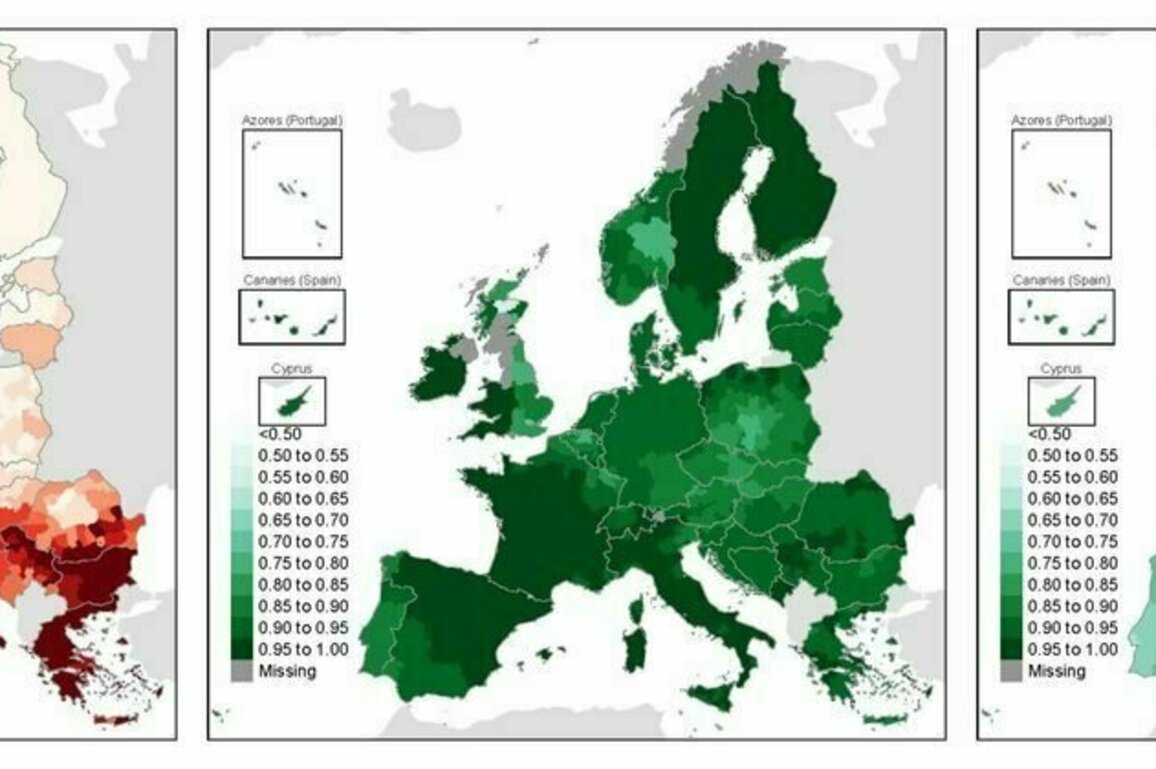
(CN) - Europe's hottest summer on record came with a staggering price. In just four months of 2024, more than 62,700 people died from heat, according to a new study in Nature Medicine. Researchers say it is the latest sign that extreme temperatures are not a distant threat but a growing public health emergency already unfolding across the continent.
The research, led by the Barcelona Institute for Global Health (ISGlobal) and backed by the "la Caixa" Foundation, analyzed heat and mortality data from 654 regions in 32 countries. They estimated 62,775 heat-related deaths between June 1 and Sept. 30, nearly 25% more than in 2023 and just shy of the 2022 record.
Across the summers of 2022, 2023 and 2024, extreme heat is believed to have killed more than 181,000 people. Southern Europe, with its hotter climate and older populations, was hit hardest.
Europe has faced deadly heat before; in 2003, a scorching heatwave killed more than 70,000 people across the continent. Russia's 2010 heat and wildfires killed thousands more, and 2019 saw records fall again as Paris and Berlin sweltered. Scientists warned those were previews of what was coming, a warning borne out by the past three summers.
In 2024, Italy was hit hardest with more than 19,000 deaths. Spain saw over 6,700, Germany about 6,300, Greece nearly 6,000 and Romania close to 5,000.
When adjusted for population, Greece recorded the highest rate with 574 deaths per million people, followed by Bulgaria at 530 and Serbia at 379.
The data revealed inequalities in who faced the greatest risk. Women saw nearly half again as many deaths as men, and age proved an even stronger dividing line. People over 75 were more than three times as likely to die in the heat as everyone else.
For study author Toma Jano, the message is straightforward. "Heat is still largely underestimated public health risk by both, governments and the general public. We have to start taking this threat seriously if we want to avoid a large number of heat-related deaths in upcoming summers," he said.
He explained action is needed on two fronts: cutting greenhouse gas emissions to slow warming, and adapting now through cooler housing, smarter urban planning and more green and blue spaces to ease heatwaves.
The study also explained why 2024 was deadlier than some hotter years. Copernicus, the EU's climate service, confirmed it as the warmest summer overall, but peak temperatures were higher in parts of 2022 and 2023. What made 2024 stand out, researchers said, was where and when the heat hit.
In Greece, heat-related deaths per million more than doubled compared to 2022. Bulgaria and Serbia also saw steep rises, showing how quickly fragile health systems can be pushed to the breaking point.
Europe's ordeal is part of a global pattern. In recent years, deadly heat has strained hospitals and power grids in the American West, driven record highs in Mexico in 2024, and brought blackouts and crippled harvests during Argentina's hottest summer in 2023. Scientists say the same warming trends fueling Europe's record summers are driving extreme heat worldwide.
The danger can strike in days, especially for the elderly and people with chronic illnesses. To get ahead of it, the team tested Forecaster.Health is a tool that turns weather data into regional heat-health alerts. They found it flagged risks more than a week in advance, and in parts of southern Europe, nearly two weeks. That kind of lead time gives hospitals, care homes and local authorities time to prepare before the heat turns deadly.
Senior author Joan Ballester Claramunt said the sheer scale of the deaths underlines how much needs to change. Europe, he argued, cannot afford to treat each deadly summer as an anomaly. Instead, it must "strengthen adaptation strategies, including the development and implementation of a new generation of continent-wide, impact-based heat-health early warning systems."
Taken together, the results are both a warning and a call to act. Europe is warming at twice the global average, and without bold measures, summers like 2024 may become the rule rather than the exception. Researchers say stronger planning and timely alerts could save lives, but the real test is whether governments are ready to treat extreme heat as the public health emergency it has already become.
Courthouse News reporter Eunseo Hong is based in the Netherlands.
Source: Courthouse News Service