


BRUSSELS (CN) - European and Chinese officials concluded technical talks Friday aimed at easing critical supply chain tensions, with the EU's trade commissioner expressing optimism that a U.S.-China truce on rare earth export controls would benefit Europe despite lingering doubts about the bloc's leverage in great power trade negotiations.
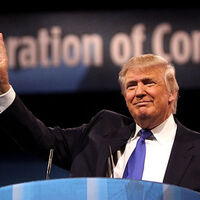
Trade Commissioner Maro efovi said the 12-month pause on Chinese rare earth restrictions, agreed on Thursday by U.S. President Donald Trump and Chinese President Xi Jinping, should apply universally. "My understanding is that the agreement, which was found between the US and China ... should apply it to all, including the EU," he told reporters in Rome.
China's suspension covered only the October restrictions. Earlier licensing rules from April, which require exporters to obtain government approval and submit detailed documentation, remain in effect and have already forced some EU firms to halt production. Europe depends on China for 98% of its rare earth magnets, key to weapons systems aiding Ukraine, electric vehicle motors and renewable energy infrastructure.
The European Commission dismissed the Brussels discussions as a "technical meeting," offering little indication the bloc can gain leverage independent of the Trump-Xi agreement. efovi said he was holding "high-level official talks on export controls" with China and would "speak again with my Chinese counterpart very, very soon."
Three weeks of panic
China's Oct. 9 decision to restrict rare earth exports sent the European industry into alarm. CEOs from automotive, wind turbine and technology manufacturers flooded the commission with urgent warnings: factories would soon go dark.
The numbers underscore Europe's dependence. Since April, China has required licenses for certain exports, but by early September had approved only 13.5% of EU applications, according to the EU Chamber of Commerce in China. efovi said Friday that about half of EU requests have now been "properly processed," an improvement that still leaves many firms without steady supplies.
"It has direct implications on the production capacities of companies in the EU," he said, noting industry warnings that stocks could run out within two to three weeks.
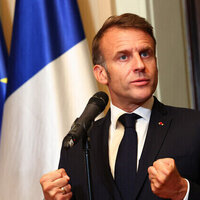
The crisis reached the highest political level at the Oct. 23 European Council summit, where French President Emmanuel Macron urged Brussels to trigger the Anti-Coercion Instrument, the first step toward potential EU retaliation through tariffs or export limits.
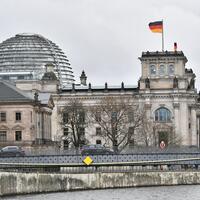
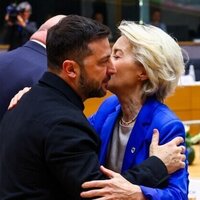
Commission President Ursula von der Leyen escalated her rhetoric Saturday in a speech in Berlin. Chinese restrictions "threaten the stability of global supply chains and will directly impact European companies," she warned, identifying vulnerable sectors: automotive, industrial motors, defense, aerospace, AI chips and data centers.
"We are ready to use all the tools at our disposal to respond if necessary," she said.
The Trump-Xi deal offered temporary relief but little certainty. The 12-month pause lacks binding terms, leaving either side free to change course or impose new conditions.
Tensions soon shifted to chips. After Dutch officials, under U.S. pressure, took control of chipmaker Nexperia over its ties to Chinese parent Wingtech - blacklisted by Washington - Beijing retaliated with export curbs on Nexperia's China-produced chips. The move threatens to halt European assembly lines within days.
Executive Vice President Henna Virkkunen met Friday with Nexperia and semiconductor industry leaders to discuss alternatives. "Investing in security of supply comes at a cost, but the price to pay when lacking resilience is even higher," she wrote on X.
The twin supply disruptions illustrate Beijing's systematic approach. Even before Oct. 9, officials noted China was imposing abusive conditions on companies in restricted sectors and demanding information equivalent to industrial secrets.
"Europe is not collateral damage; it is a deliberate target of Beijing's strategy," wrote Tobias Gehrke and Janka Oertel, from the European Council on Foreign Relations (ECFR), in an Oct. 21 analysis. "For Europe, it is about survival; the export restrictions are a direct threat for both its military-industrial build-up (and, in turn, the defence of Ukraine) and its industrial and energy transition."
The 'bazooka' Europe won't use
The Anti-Coercion Instrument, which entered force in 2023, was designed for exactly this scenario. Unlike traditional trade defense tools, it targets political or economic pressure intended to force policy changes.
EU officials internally refer to it as the "bazooka." It allows Brussels to impose not just tariffs on goods but also restrict exports, market access, public procurement and services.
The EU could have used the Anti-Coercion Instrument against Trump's tariffs, targeting U.S. tech firms with major European profits. But the European Commission opted for restraint. Trade Director-General Sabine Weyand later said security priorities - including NATO ties and U.S. arms support for Ukraine - drove acceptance of an unfavorable August tariff deal.
Against China, the tool may be more effective, as it doesn't require unanimous approval, a key advantage given Spain and Hungary's pro-Beijing leanings.
Europe also holds leverage: semiconductor machinery and parts, jet engines, Airbus aircraft, advanced steels, superalloys and large gas turbines - all critical to China's industrial and aviation sectors.
The EU could also target Chinese goods diverted from the U.S. market by Trump's tariffs. Brussels has already moved to protect its steel industry, cutting duty-free imports by 47% and imposing 50% tariffs on excess Chinese shipments flooding Europe.
In her Berlin speech, von der Leyen outlined plans to diversify supply chains through recycling, new partnerships from Brazil to Australia, joint purchasing modeled on Japan's collective procurement approach, strategic stockpiles and 2030 production targets.
efovi expanded on the joint purchasing vision Friday, saying, "We can do the bidding on behalf of the biggest trading bloc in the world, which is the European Union, and to get the critical raw materials for a better price." The stockpiles would be "stored in Europe so we will not be under this permanent tension," he said. Italy proposed hosting a storage site.
But the initiative requires time - a luxury Europe didn't have with assembly lines at risk. Industry groups argue the bloc lacks the comprehensive financial architecture to compete with capital-backed Chinese and U.S. critical minerals strategies.
The Ukraine-sanctions complication
Brussels, under pressure from Trump and pursuing its own security interests, is also attempting without notable success to curtail Beijing's support for Russia's war on Ukraine.
At the White House's urging, the EU added Chinese banks and refineries to its two latest rounds of sanctions against Russia, arguing they help Moscow evade restrictions. The move drew sharp criticism from Beijing, with Prime Minister Li Qiang calling the sanctions "unacceptable" during talks with European Council President Antonio Costa in Asia this week.
Von der Leyen and the chief of diplomacy, Kaja Kallas, have both condemned China's support for Moscow, with von der Leyen warning in July that it has a "direct and dangerous impact on European security."
Still, the commission faces competing pressures at home: Macron's call for a tougher stance on Beijing versus the short-term interests of Germany and other member states reliant on Chinese trade and investment.
The crisis exposes Europe's fundamental dilemma: dependence on China for critical materials gives Beijing leverage to extract concessions on trade, investment and Ukraine, yet using the EU's retaliatory tools risks crippling the automotive, wind energy and defense industries that rely on those same Chinese supplies. Friday's talks offered little evidence Brussels can escape that trap.
Courthouse News correspondent Yuval Molina is based in Brussels.
Source: Courthouse News Service