

Ukraineis facing a harsh winter, and more will likely follow. Over the next two years, the war-ravaged country is staring downa $65 billion hole in its budget, according to the International Monetary Funds (IMF) best estimates.
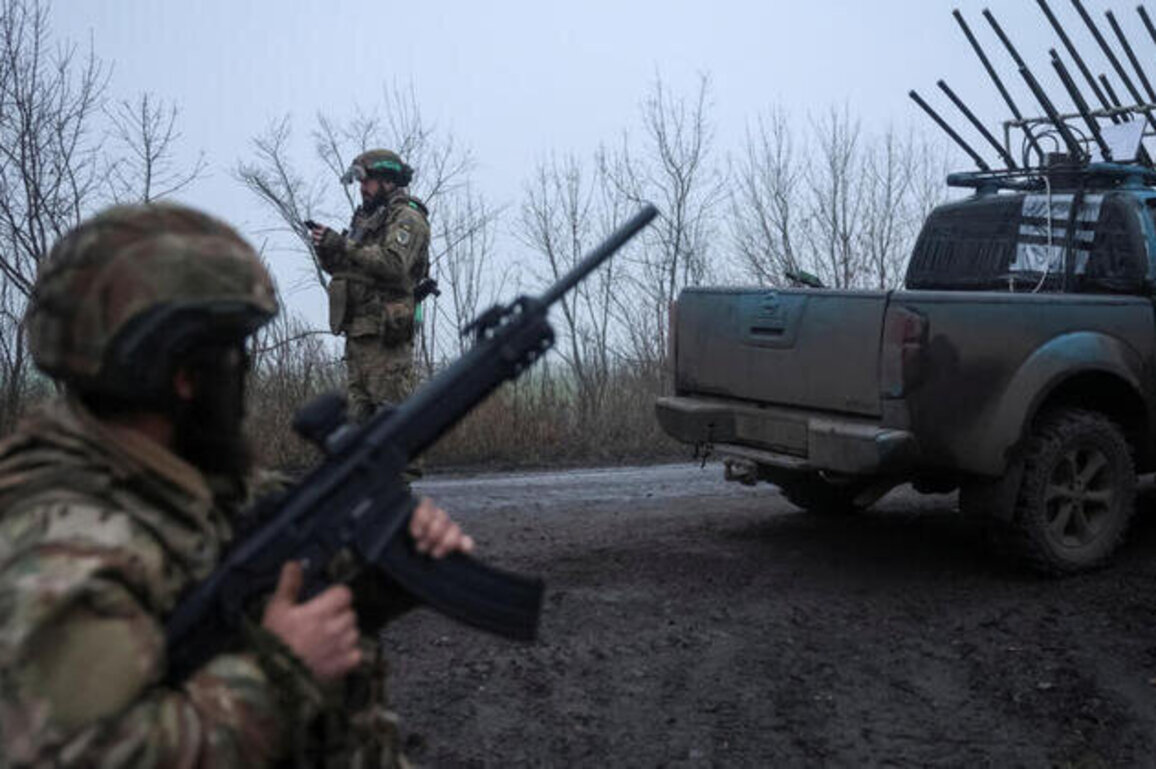
Almosttwo-thirds of the countrys stretched budgetcurrently goes towards funding what has becomea grinding war of attritionto hold back the Russian advance. The day-to-day needs of Ukraines citizens including pension payments and public-sector salaries are largely covered by foreign aid from its Western allies.
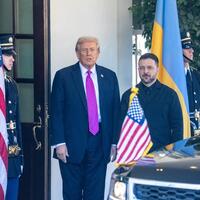
Since President Donald Trumps return to office in January, the US formerly Ukraines foremost single backer has allocatedno new funds for Ukraine, forcingEuropeto scramble to fill the gap in both military andhumanitarian aid.
And whiletheEuropean Commissionhas pledged tomobilise up to 100 billionfor Ukraine when the EU's next budget begins in 2028, finding ways to keep money flowing to Kyiv until then has not been easy.
Which brings us to the $300 billion elephant in the room. For years, Russias central bank has invested its foreign exchange reserves abroad in bonds and other securities.These assets now sit frozen in banks and clearing houses in Europe and beyond, immobilised under Westernsanctionssince Russias full-scale invasion beganin 2022.
Since then, Europe has been split over what to do with these funds.FranceandGermanyhave baulked at repeated urging from the Biden administration,Polandand the Baltic and Nordic states to seize these assets to fund Ukraines fight againstRussia.
As state property, these assets which Russia still owns, even if it cannot touch them are immune to seizure under international law. Moscowhas made it clearthat it would launch immediate legal action against any such expropriation, likely seizing the unknown amount of Western assets that Russia has frozen in retaliation.
Paris and Berlin have also raised fears that unilaterally confiscating hundreds of billions worth of sovereign assets could scare investors away from European financial markets.
But as pressure mounts to raise funds for Ukraine, the European Commission has hit upon a way forwarda so-called reparations loanthat would allow the bloc to lend Ukraine some 140 billion without, it says, directly seizing the frozen funds.
Read moreFrance set to revive military conscription but this time it's voluntary
Its a proposal explicitly designed to side-step the legal quagmire of outright confiscation, argued Nicolas Vron, a senior fellow at the Brussels-based Bruegel think-tank and the Peterson Institute for International Economics.
The reparations loan is a very elegant piece of financial engineering it solves a lot of problems at once, he said.And one of the key features of the construct is that it really doesnt touch the Russian assets immobilised at Euroclear.
Of the roughly $300 billion worth of frozen Russian central bank assets, the vast bulk is held in Europe includingsome 185 billion in Euroclear, a Brussels-based central securities depository.
From what we know of the proposal, Euroclear would be required to issue an interest-free loan equivalent to the value of the frozen assets to the EU the bulk of which has matured into cash.Of that 185 billion, roughly 45 billionwould likely be used to pay back money that EU countries and their G7 allies have already loaned to Ukraine, financed by the interest earned by these frozen funds.
The rest would be lent to Kyiv, which under the terms of the loan would not be required to repay it until it had received compensation from Moscow for the devastation wrought by the Russian invasion the reparations that give the loan its name. Until then, the assets would remain as they are now beyond Moscows reach.
The reparations loan doesnt confiscate that cash, and it also doesnt threaten confiscation of that cash, Vron said. And therefore it has no impact on Russian property even so, of course, its predicated on the notion that this cash will remain immobilised.
Read moreRussian spy network exploits Ukrainian teenagers in Europe
Not everyone is convinced by this financial workaround. In a letter to European Commission PresidentUrsula von der Leyenand EU Council President Antonio Costaseen by the Financial Times, Euroclears chief executive Valrie Urbain warned that investors and Russia would likely still see the forced loan as equivalent to confiscation.
As Euroclears host state,Belgiumhas argued that it would be on the front line of any Russian retaliation legal or otherwise. In the blocs last summit in October, Belgian Prime Minister Bart De Wever refused to go along with the plan unless the rest of the bloc agreed to share the legal and financial risk. The bloc is set to meet again in Brussels on December 18.
Alexander Kolyandr, a financial analyst and a senior scholar at the Center for European Policy Analysis, said that the risks to both Belgium and Euroclear were genuine.
Theyre worried that if Russia retaliates and nationalises Euroclears account in Russia,that might create a capital shortage that the Belgian government would be forced to cover so theres a financial risk as well, he said.
If Russia seizes Euroclears account in Moscow, then it is possible that Euroclear clients, Western clients who invested in Russian assets and now see their assets frozen, will try to sue Euroclear and seek compensation.And finally, when all these things happen, Euroclear is afraid and I think this is a reasonable fear that their clients will take their business elsewhere.
Adding to the pressure facing the EU is the risk that Europe is not the only power eyeing the frozen funds. A 28-point peace proposal for the Ukraine war, initially backed by the US, called for $100 billion of the Russian assets to befunnelled into the US-led reconstruction of Ukraineinvestments for which Washington would receive 50 percent of the profits. Europe, for its part, would be required to put up $100 billion of its own money to match the investment.
Read moreWitkoff's art of the deal? Trump aide coaches Kremlin on Ukraine deal response
A more concrete risk is the possibility that EU member states would end up being responsible for paying back the full 140-billion-euroreparationsloan should Russia refuse to pay war damages. While it won't appear on their national budgets, EU member states will between them be responsible for guaranteeing the loan.
Vron said that the fact that European countries could find themselves forced to pay back the loan gave the bloc a strong incentive to do everything in its power to push Russia towards paying compensation to Kyiv.
If Russia pays reparations, fine, Euroclear will be reimbursed with the amount of the Russian reparations, he said. If Russia ends up not paying reparations for whatever reason, then its manageable as well, because Euroclear will be repaid since the guarantees provided by the member states participating in the loan will be triggered.
In that scenario, then yes, the member states will have to pay to reimburse Euroclear, but that will be part of the broader settlement of the Ukraine-Russia conflict, he said.
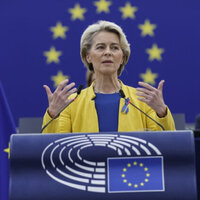
Von der Leyen said on Wednesday that she did not believe that the European public would be left to shoulder the burden alone, without elaborating further. She said her executive was preparing to present a legal text outlining the proposal.
"To be very clear I cannot see any scenario in which the European taxpayers alone will pay the bill," she said.
The plan also depends on the Russian assets staying frozen. As it stands, EU sanctions need to be renewed by a unanimous voteevery six months, making it dependent on the continued support of member states favouring rapprochement with Moscow such as Hungary and Slovakia.
Kolyandr said that while the EU had other ways of raising funds for Ukraine, none of them were free from controversy.
Short-term, Europe can use itsEuropean Unionfund, but that might face opposition from other countries, because this money was intended for infrastructure and investment projects, he said. It can also raise debt, either as a union which I doubt or by nation-state. But that would be politically difficult, because in fact that means that European voters and taxpayers would be forced to pay for that.
Whatever form the final proposal takes, though, Kolyandr said that the EUs struggle to agree on a common path forward risked leaving Ukraine exposed.
To put it bluntly, if they fail to resolve the issue of Russian assets, it would be a major clusterfuck, he said. Because Ukraine needs money both for its budget and its military operations. When the United States closed the chequebook, Europe and the IMF remained the main lenders. And theIMFdoesnt want to move ahead until it gets any clarity on how Europe is going to cough up the money.
Originally published on France24