

PARIS (CN) - Almost one month after the U.S. and Israel launched airstrikes on Iran - triggering a deepening regional crisis - Europe has yet to define a clear response. Leaders point to a defensive stance, but experts wonder whether there is any strategy at all.
"Well, I think the main answer, apart from laughing about Europe's defense strategy, is that it doesn't have one at the moment," Andrea Teti, associate professor of political science at the University of Salerno and associate editor of Middle East Critique, said. "What their excuse for a defense strategy is, is to arm."
Earlier this month, French President Emmanuel Macron announced that France would increase its stock of nuclear warheads. It has traditionally kept a small arsenal, at 290 - compared to thousands between the U.S. and Russia - to establish a deterrent without entering into an arms race, but will not disclose the new number.
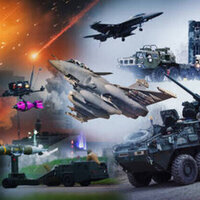
The U.K. also announced it would spend over $500 million on hypersonic and long-range weapons alongside France and Germany, which plans to spend roughly $127 billion on defense this year. On Thursday, NATO announced members increased defense spending by 20% in 2025.
Europe has maintained its stance is defensive and often invokes its need for more strategic autonomy and higher security, with Russia's Ukraine invasion and U.S. ambivalence weighing heavily. But it's unclear where its plan goes from there.
"The problem that I see with the defense strategy is that aside from the enormous cost - which is not a side issue, because this is seriously damaging to European economies - is that the EU at the moment seems to have absolutely no idea of what it wants to do with the power, the military hardware, once they acquire it," Teti said. "At the moment, the policy is 'we want to give ourselves tools.'"
Alain De Neve, a research fellow at the Royal Higher Institute of Defense in Brussels, agreed the bloc hasn't been clear.
"A European strategy regarding this war against Iran actually hardly exists - it's difficult to clearly identify the European Union's position," he said. "However, what we have witnessed in recent days and weeks is a resurgence of programmatic policies aimed at adapting European rearmament to an international situation that continues to evolve."
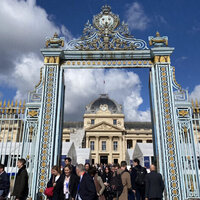
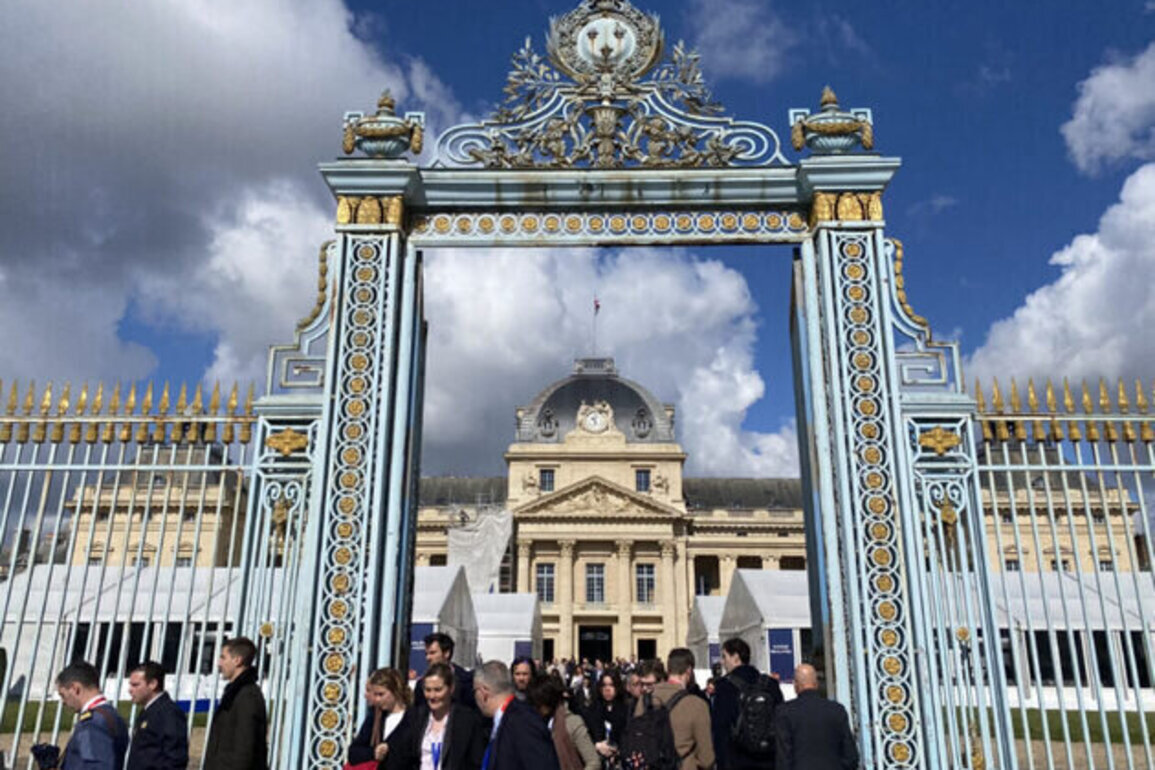
This week, the Paris Defense Strategy Forum shone a spotlight on the complex issues facing the bloc. From Tuesday through Thursday, experts gathered at the Ecole Militaire - a military complex against the backdrop of the Eiffel Tower - to address a range of issues from surveillance to NATO and the role of civil society in peace preservation.
On Wednesday afternoon, Jean-Marie Dumon, deputy director general of defense and security at the naval construction union GICAN, said European naval cooperation is not a recent phenomenon. However, some new trends are emerging.
"What has changed at the European level ... is an explicit support of the European industrial defense industry, which didn't exist 10 years ago," he said at a roundtable. "We're entering into a new era of production."
On Wednesday, Brussels announced expedited funding for startups developing drones and other defense innovations. Many nations are also upping their recruiting goals after militaries shrunk in post-World War II peacetime.
Throughout the forum, decorated military members wandered through booths and food trucks. Panels took place in tents named after figures like Hannah Arendt and the French military officer Andre Beaudre. People often lined up for access to the discussions.
On Thursday morning, a panel addressing the regional perspectives of the power and influence of Iran filled the auditorium. One man who was initially refused entry because the space was full, said he came to the event specifically for this talk.
Adel Bakawan, an associate research fellow at Ifri's Turkey and Middle East program, described the ongoing Iran war as a monumental "third movement" after Sept. 11 in 2001 and the Arab Spring in 2011. He said after this war, "the Gulf world will never be the same."
Pierre Razoux, a co-panelist and academic director of the Mediterranean Foundation for Strategic Studies, addressed Europe's vague positioning throughout the conflict.
"The problem is that in Europe, there are too many visions," he said. "You have those looking east, west, transatlantic and those looking nowhere."

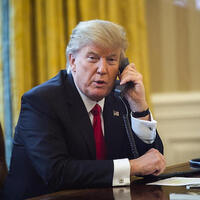
Ever since the U.S. and Israel launched airstrikes on Iran, Europe has been caught in a balancing act. Leaders have widely stated they don't want to get involved but also want to exercise caution around U.S. President Donald Trump and their allies in the Gulf.
"None of them really want to frustrate Trump because they can say he can be vindictive, he can impose unilateral sanctions or policies or tariffs against the EU or the individual European states," Neil Quilliam, an associate fellow at the Middle East and North Africa Program at Chatham House, said. "And they do need to demonstrate to their Gulf allies and partners that they're there to help them, they're there to lend defensive support."
De Neve said rather than trying to play both sides, countries like France, the U.K. and Germany are trying to "reconcile an international legalistic approach." Although they denounce the war being launched outside of international law, they're also condemning Iran for playing a "deceptive game" to buy time for its nuclear enrichment program.
EU leaders rebuffed pressure from Washington to take a more active immediate role in securing the chokepoint at the center of the Iran war's economic fallout, the Strait of Hormuz, while offering some help once fighting ends.
But ultimately, Teti said the conflict will continue to proliferate until Europe deals with the underlying issues. He said the bloc is putting a Band-Aid on a bullet wound.
"If you don't address the root causes, sooner or later it's going to come back and bite you," he said. "And that's the fundamental problem."
Source: Courthouse News Service