


BRUSSELS (CN) - The European Central Bank held its key interest rate unchanged Thursday for a fifth consecutive meeting, betting that inflation will return to its 2% target even as the euro's surge to a four-year high squeezes the bloc's export-driven economies.
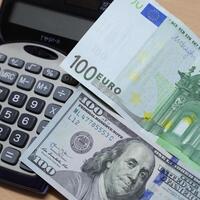
The currency climbed above $1.20 last week for the first time since 2021, a roughly 13% gain over the past year. The euro's strength, driven largely by the dollar's slide under President Donald Trump's volatile trade policy, is creating a dilemma for European policymakers: The same currency gains that attract investment threaten to choke off exports and push inflation dangerously below target.
"What we observed collectively is that the dollar has depreciated measurably against the euro, but not in the last few days, but since March 2025," ECB President Christine Lagarde told reporters Thursday, framing the currency move as dollar weakness rather than euro strength.
The appreciation is "incorporated in our baseline," she said, and the bank - which sets monetary policy for the 21-country eurozone - does not target exchange rates.
Yet Lagarde acknowledged the risk the euro poses. "A stronger euro could bring inflation down beyond current expectations," she said, even as she insisted inflation remains "in a good place" and risks are "broadly balanced."
Eurozone inflation fell to 1.7% in January from 2% in December, according to Eurostat data published Tuesday. Core inflation eased to 2.2%, its lowest since October 2021. Energy prices fell 4.1% annually, while services inflation moderated to 3.2% from 3.4%.
The softer core reading "will add fuel to the more dovish debates," though the ECB was expected to remain in wait-and-see mode, Bert Colijn, ING's chief economist for the Netherlands, said Wednesday. The decision matched market expectations, which had assigned less than 10% probability to a rate cut.
But the stronger euro makes European goods more expensive for foreign buyers, hitting exporters already facing U.S. tariffs and trade uncertainty. EU exports to the United States fell 20% in November from a year earlier, even as German auto production surged 7.6%, leaving European manufacturers with full factories and emptying order books.
The dollar's slide has amplified the euro's rise. U.S. inflation remains sticky - core inflation stands at 3.2% year-over-year - but the dollar fell 9% in 2025, its biggest annual decline since 2017, and has dropped another 2% in 2026.
Trump's erratic tariff policy has spooked investors. In January, he floated then dropped potential tariffs on European countries that opposed his push to acquire Greenland. The dollar index fell 1.5% on Jan. 27, its biggest one-day drop since April. Trump dismissed concerns about the dollar's weakness, telling reporters in Iowa that day: "No, I think it's great. The dollar's doing great."
The euro's strength attracts foreign capital Europe needs for defense and infrastructure but threatens the export competitiveness underpinning the eurozone's recovery. For U.S. exporters, who send roughly $400 billion in goods annually to the eurozone, the stronger euro creates tougher competition.
The euro's rise has lowered the ECB's inflation forecasts by 0.1 percentage point, according to Carsten Brzeski, ING's global head of macro. If the currency hits 1.25 against the dollar by March, inflation could stay below 2% for three years running, "possibly even below 1.8%," he wrote Thursday. That could "raise doubts about how symmetric the ECB's inflation target really is and hence still encourage more dovish ECB members to push for an insurance rate cut."
Not all ECB policymakers share Lagarde's calm. Further euro gains could "create of course a certain necessity to react in terms of monetary policy," Austrian central bank Governor Martin Kocher said last week.
Bank of France Governor Francois Villeroy de Galhau said, "[We are] closely monitoring the appreciation of the euro and its potential impact on lower inflation."
Lagarde's comments on the exchange rate were "very fluid," Brzeski noted, suggesting internal debate remains unsettled. The meeting, he concluded, "brings back memories of the old saying 'our dollar, your problem.'"
All in all, recent data remain "broadly in line" with the ECB's baseline, said Oliver Rakau, chief Germany economist at Oxford Economics, in a brief shared Tuesday with Courthouse News. Domestic demand and lending growth give the bank room to wait, he said. The euro's gains carry downside inflation risks of 0.1 to 0.2 percentage points, but the ECB is "unlikely to signal any intention to respond" unless "the euro appreciates much more."
The ECB won't update its staff projections until March, when it will formally work the euro's gains into its forecasts. That's when the tension becomes unavoidable. For months, the bank has projected calm, but it may soon face a choice between its global currency ambitions and the export competitiveness Europe's economy still runs on.
Europe wants to be a strategic power, which requires massive capital inflows. A stronger currency attracts that capital but undermines the export manufacturers that capital is meant to help. Without a capital markets union and fiscal union to back it up, Brzeski argued, the eurozone isn't equipped to handle sustained currency appreciation.
Lagarde insists the currency situation is under control. But with national central bankers warning of rate cuts, export orders falling, and the dollar's slide tied to Trump's policies, her calm may not last if the dollar keeps falling. The March projections will show whether the ECB can keep calling this a "good place."
Courthouse News correspondent Yuval Molina is based in Brussels, Belgium.
Source: Courthouse News Service